Compare
Elephanta or Kanheri caves?
Elephanta or Kanheri: which Mumbai caves should you see? Hindu rock-cut temples on an island against a Buddhist monastery in a national park.
See Elephanta dates ↗Quick answer
Choose Elephanta if you want carved Hindu sculpture, a harbour ferry and one famous three-headed Shiva. Choose Kanheri if you prefer a quieter Buddhist cave monastery in forest, reached by road, with no sea crossing. They are different kinds of day, not rival versions of one. If you can spare two half-days, see both; if only one, decide whether you want sculpture or monastic cells.
Two Mumbai cave sites
| Question | Elephanta | Kanheri |
|---|---|---|
| Setting | Island, by ferry | National park, by road |
| Tradition | Hindu temples, two Buddhist caves | Buddhist monastery |
| Headline sight | Three-faced Shiva | Great chaitya hall |
| Closed day | Mondays | Check before you go |
| Best for | Carved stories | Monks' cells, forest |
The short answer
Both are rock-cut caves inside the Mumbai area, and both are cut from basalt, but they are made for different faiths and reached in different ways. Elephanta is a set of Hindu temple caves on an island in the harbour, with a ferry, a climb and carved panels of Shiva. Kanheri is a Buddhist monastery of about 109 caves on a hillside in Sanjay Gandhi National Park, with a plain, scattered layout and a great stupa hall. If you want sculpture, go to Elephanta. If you want to walk among monks' cells, go to Kanheri.
- Elephanta: sculpture, ferry, UNESCO listing
- Kanheri: monastery, forest, no ferry
- Both together: two half-days, not one
Where each one is
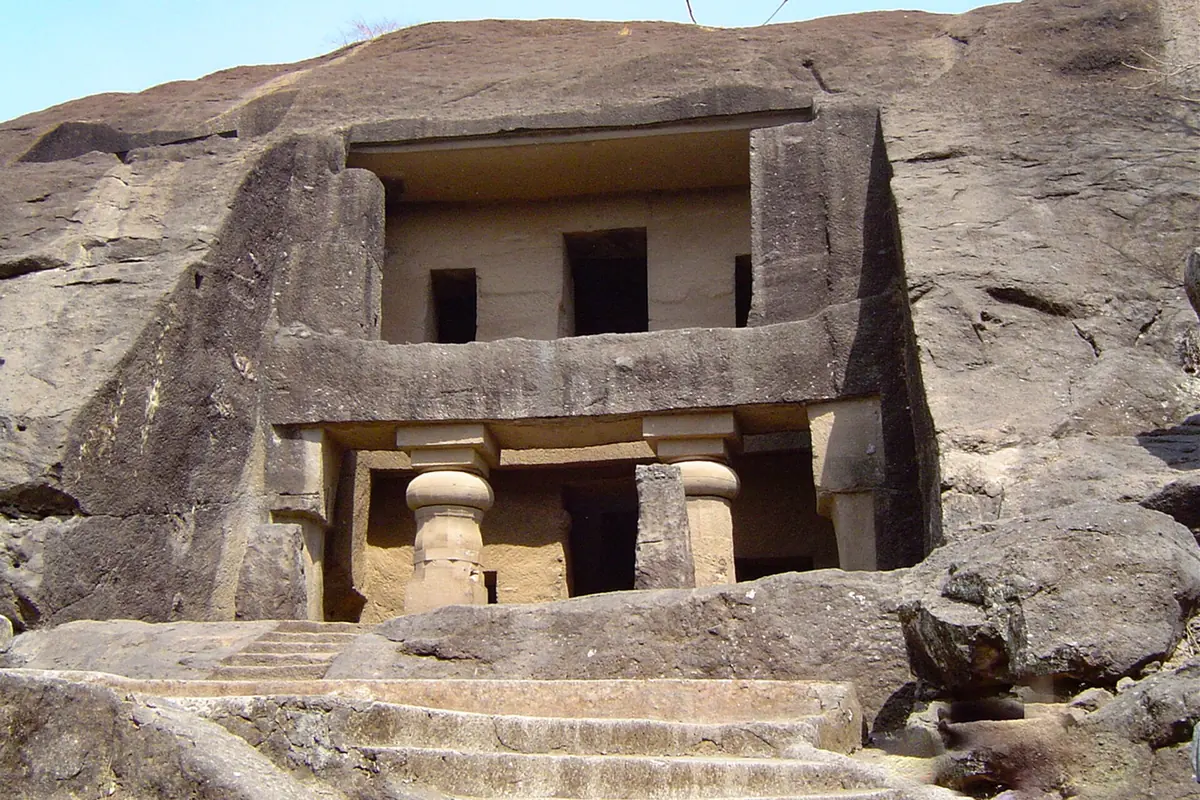
Elephanta Island, or Gharapuri, lies in Mumbai Harbour, east of the Gateway of India, and boats leave from the jetties by the Gateway of India. Kanheri is cut into a hillside inside Sanjay Gandhi National Park on Salsette island, in the western outskirts of Mumbai. Wikipedia describes the park as a protected area within the municipal limits of a major city, known for its leopards, with the caves in its centre. The name Kanheri comes from the Sanskrit Krishnagiri, meaning black mountain. One trip begins on the water, the other on a road to the park. That difference shapes the whole day: at Elephanta your timetable follows the boat, and at Kanheri it follows the road and your own pace on foot.
Two faiths, two ideas
Elephanta's caves are mainly Hindu. Wikipedia counts five Hindu caves on the western hill and two Buddhist ones with water tanks on the eastern hill, and the Great Cave is devoted to Shiva. Kanheri is Buddhist throughout. Most of its caves were viharas, which Wikipedia says were places for living, studying and meditating, and the large number of them suggests an organised community of monks. The stupa mounds on Elephanta's eastern hill are older than its temples, dated by Wikipedia to about the 2nd century BCE. At Elephanta you look at carved scenes; at Kanheri you see where people lived and prayed. The Great Cave is where visitors spend most of their time.
Age and scale
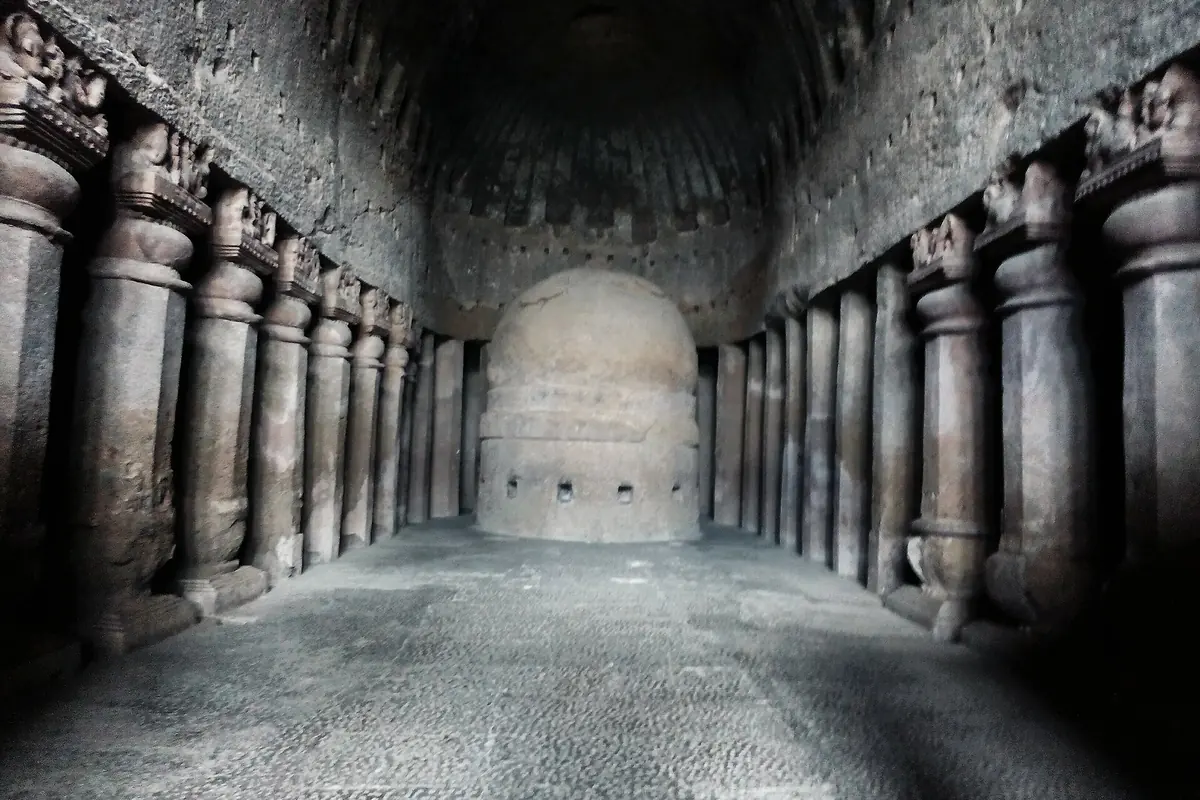
The Archaeological Survey of India dates the seven Elephanta caves to roughly the 6th and 7th centuries, and UNESCO inscribed the site in 1987. Kanheri is older and larger. Wikipedia dates its caves from about the 1st century CE to the 10th, and counts 109 of them. Its great chaitya hall, Cave 3, has a plan copied from the Karla Caves, with a stupa inside and an inscription of about 170 CE on the entrance jamb. Elephanta is a handful of caves to see in half a day; Kanheri is a hillside to explore.
What each one shows you
Elephanta's best-known sight is the three-faced Shiva, a colossal bust 5.45 metres tall, with panels of Shiva and Parvati as one figure, Shiva bringing the Ganges down to earth, and a wedding scene. Kanheri's best-known sight is the great chaitya hall with its stupa, and Wikipedia calls the bodhisattva Avalokiteshvara the most distinctive sculpted figure there. It also records rock-cut channels that carried rainwater into cisterns, so most caves had water of their own. The island is about images; the hillside is about how a monastery worked. Wikipedia also records nearly 51 legible inscriptions at Kanheri, in Brahmi and Devanagari, so the hillside is a place where you can read as well as look.
Getting there and the day it takes
Elephanta is a half-day built around a ferry: about an hour each way on a guided tour, plus about 120 steps and the walk through the caves. Kanheri has no sea crossing, so a weather delay on the water does not apply, and Wikipedia notes easy access from Mumbai, though a forest hillside has its own conditions. Wikipedia says the Global Vipassana Pagoda, a meditation hall near Gorai that opened in 2009, has the world's largest stone dome built without pillars. A Kanheri tour that adds the pagoda fills a half-day too. Check your own meeting point and start time on the booking page.
Read next: Getting to Elephanta
Mondays and the weather
The Archaeological Survey of India lists Elephanta as closed on Mondays, and from June to September the monsoon can delay or cancel ferries. Kanheri follows the park's own days: Wikipedia notes that, apart from Gandhi Tekdi and Kanheri Caves, visitor activities in the park are generally not operated on Mondays, which suggests the caves stay open, but you should confirm for your date. Neither is a safe plan for a rushed day, and the monsoon months deserve extra slack in either case. If a Monday is the only free day in your schedule, check Kanheri first and read the current arrangements for your date.
Doing both
A visitor with two half-days can see both without repeating themselves. Elephanta gives the sculpted Hindu temple, Kanheri the monastic cave complex, so the two together cover two religious traditions and several centuries of rock-cutting in the same metropolitan area. Put them on separate days, because the ferry and the national park lie in opposite directions from the centre. Start with the one that matches your interest, then use the other as a second opinion on how caves were used.
Who this isn't for
Neither suits a traveller who dislikes climbing steps, long walks or heat. Elephanta asks about 120 steps and is not suitable for people with back problems or mobility impairments. Kanheri is spread over a hillside and many of its caves are reached on foot, so expect paths and stairs there too. If you want a single quick sight in Mumbai, a walk through the old streets of the south is shorter than either. If caves bore you, neither will change your mind, and a day on the water or in a park may be a better use of the time.
Booking
Each site has its own guided tour on the booking pages. Open the calendar for a date and the options appear with their meeting points; payment can wait until later. Your confirmation gives the meeting point of the option you chose, so read it the evening before. Cancelling more than a day ahead costs nothing. For Elephanta, check that your date is not a Monday and allow for monsoon delays between June and September. For Kanheri, read what the tour includes before you book, since the pagoda is added on some options.
Frequently asked questions
Which is better, Elephanta or Kanheri?
Neither is better; they suit different tastes. Elephanta has carved Hindu sculpture and a harbour ferry. Kanheri is a Buddhist monastery of about 109 caves in a national park, reached by road.
Can you see both in one day?
It is better as two half-days. The ferry from the Gateway of India and the national park lie in opposite directions from the centre of Mumbai.
Which one has the three-headed Shiva?
Elephanta. The three-faced Shiva is carved into the south wall of the Great Cave and is the best-known sculpture on the island.
Is Kanheri Buddhist?
Yes. Wikipedia describes it as a Buddhist cave complex, with most caves used as viharas for living, studying and meditating.
Which is older?
Kanheri. Wikipedia dates its caves from about the 1st century CE; the Archaeological Survey of India dates Elephanta's to roughly the 6th and 7th centuries.
Is the ferry needed for Kanheri?
No. Kanheri lies on Salsette island in Sanjay Gandhi National Park and is reached by road, so no sea crossing is involved.
Sources